Safety
Navigating Kalalau Trail’s Mile 7 isn’t just about managing vertigo—it is about managing the elements. In the backcountry of Kauai’s North Shore, changes in weather conditions dictate whether a crossing is a standard trek or a severe hazard. True Crawler’s Ledge safety means knowing when to press forward and exactly when to turn back.
Footwear
Nimble, Free-Draining Footwear
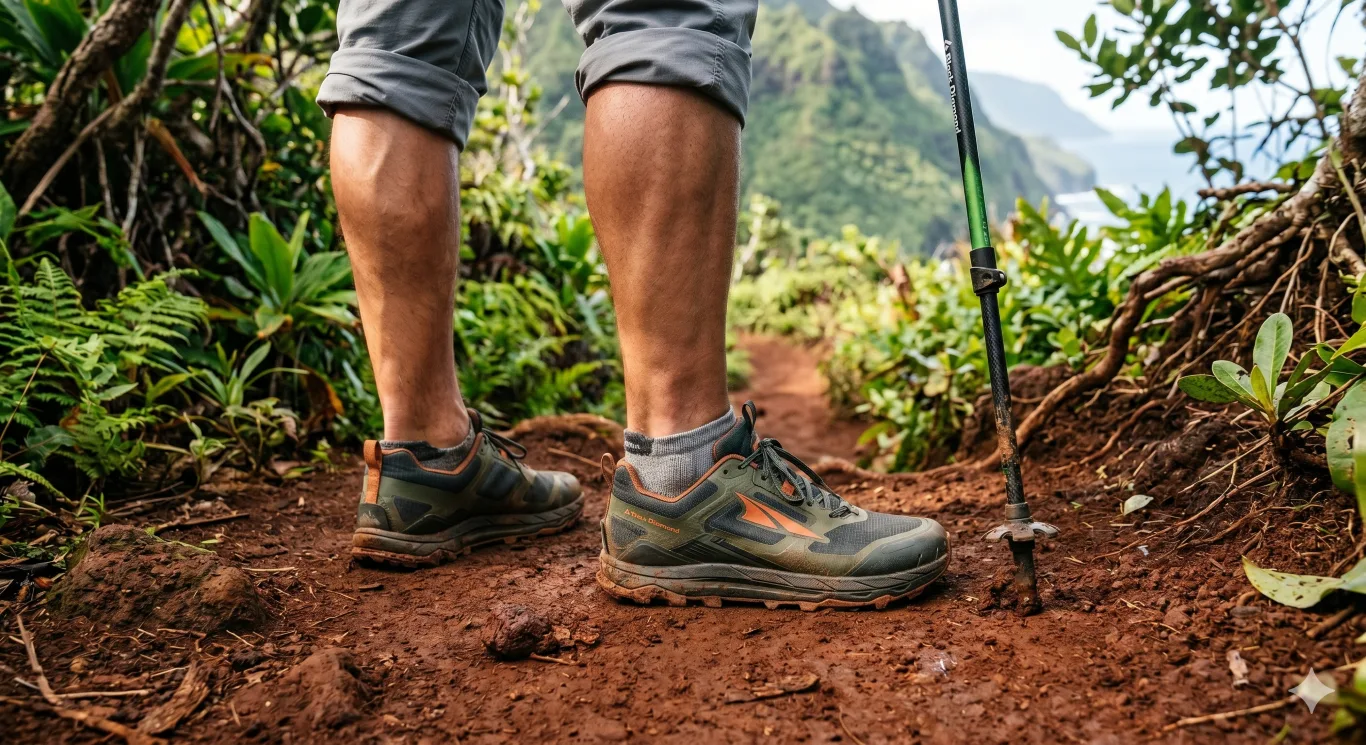
Heavy, waterproof backpacking boots are a trap on the Kalalau Trail. Their stiff, deep treads easily clog with thick volcanic clay, transforming your sole into a slick, tractionless surface. Because this hike requires crossing numerous streams, waterproof boots will inevitably fill with water and pool it inside, creating a heavy, blister-prone environment.
Instead, choose lightweight trail runners or rugged hiking sandals with aggressive, flexible lugs. Their pliable soles naturally flex to shed packed mud with every step. Also, their open or highly breathable designs drain water instantly—keeping your feet nimble, dry, and firmly anchored to the rock face at Mile 7.
Rigid Trekking Poles
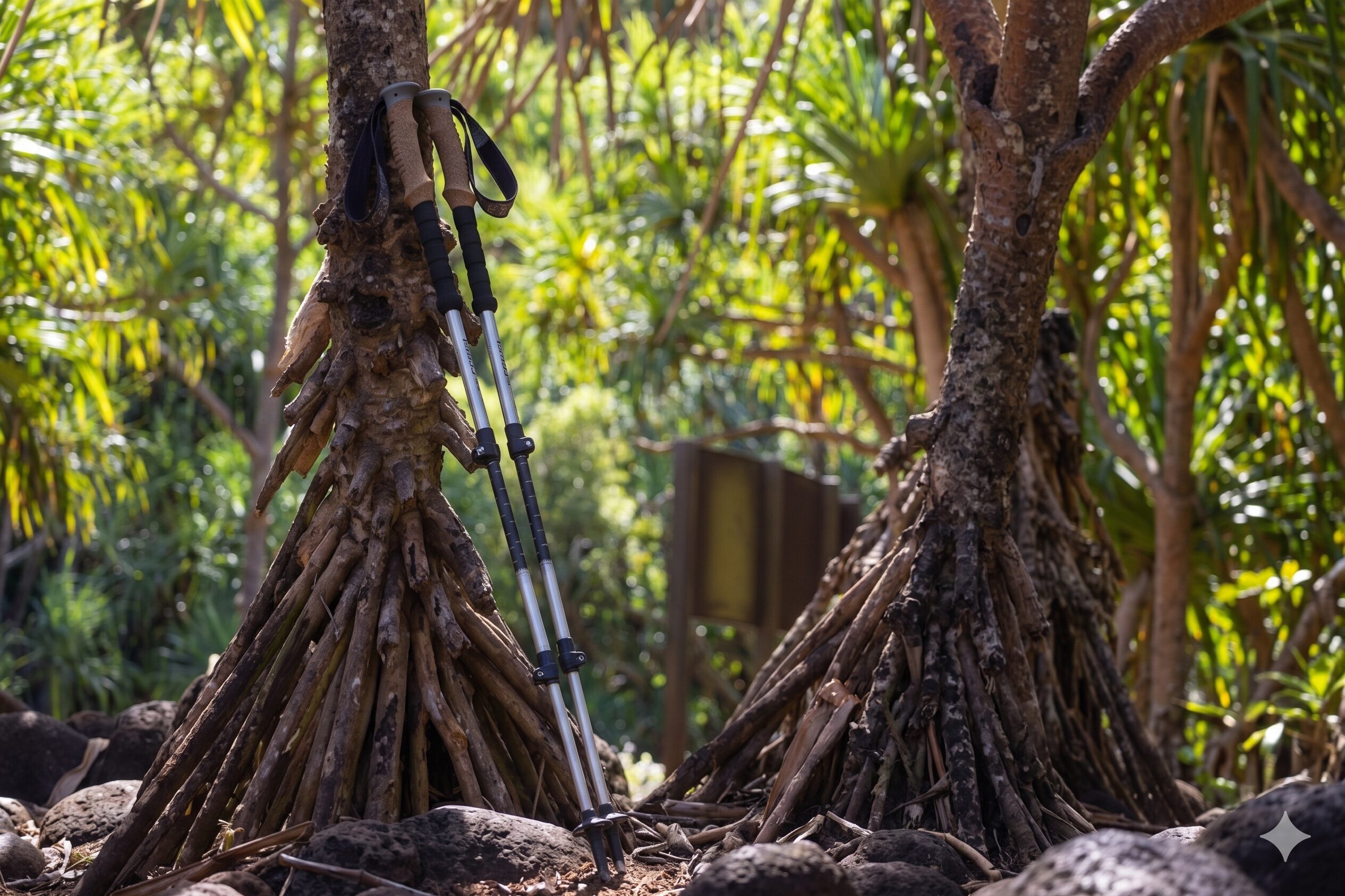
Rigid, Adjustable Trekking Poles
Trekking poles are absolutely non-negotiable for safely navigating Mile 7. When you are carrying a heavy multi-day backpack, your center of gravity naturally shifts upward, making you far more vulnerable to sudden wind gusts or missteps. A pair of rigid, lockable poles acts as an extension of your body, providing two additional points of contact that dramatically increase your stability on the narrow cliffside shelf.
Ensure your poles are adjusted to a shorter height on the uphill side to keep your body weight leaning safely into the solid rock face rather than away from it.
Be Cautious
- Satellite Communication: Cell service is non-existent on the Kalalau Trail. You must carry a dedicated satellite messenger (like a Garmin inReach) to signal for assistance or communicate with emergency contacts if a hiker becomes stuck or injured.
- Managing Vertigo Panic: If your knees lock up or panic sets in mid-traverse, do not try to rush forward. Turn your body entirely toward the rock face, lower your center of gravity by kneeling or sitting on a wider ledge pocket, and breathe slowly until your heart rate drops.
- The Golden Rule: It is always better to spend an unexpected night camping at Hanakoa Valley waiting for mud to dry than to rush a slick crossing under dangerous conditions.
Ready to See It in Person?
Don’t let the videos freeze you up—with the right footwear, solid trekking poles, and clear weather, this traverse is an unforgettable bucket-list experience. Head over to our main planning hub to check current permit openings and camp rules.