For backpackers tackling the legendary 11-mile Kalalau Trail on Kauai, one specific geographic landmark looms larger than any other: Crawler’s Ledge.
Located near the 7-mile marker of the trek, this narrow, exposed cliff path has earned a global reputation as one of the most mentally taxing and inherently risky stretches of trail in the world. But is it truly as terrifying as the viral videos claim, or is it a manageable obstacle for an experienced hiker?
Understanding the unique mechanics, weather factors, and mental preparation required for this section is critical before you lace up your boots.
What Exactly is Crawler’s Ledge?
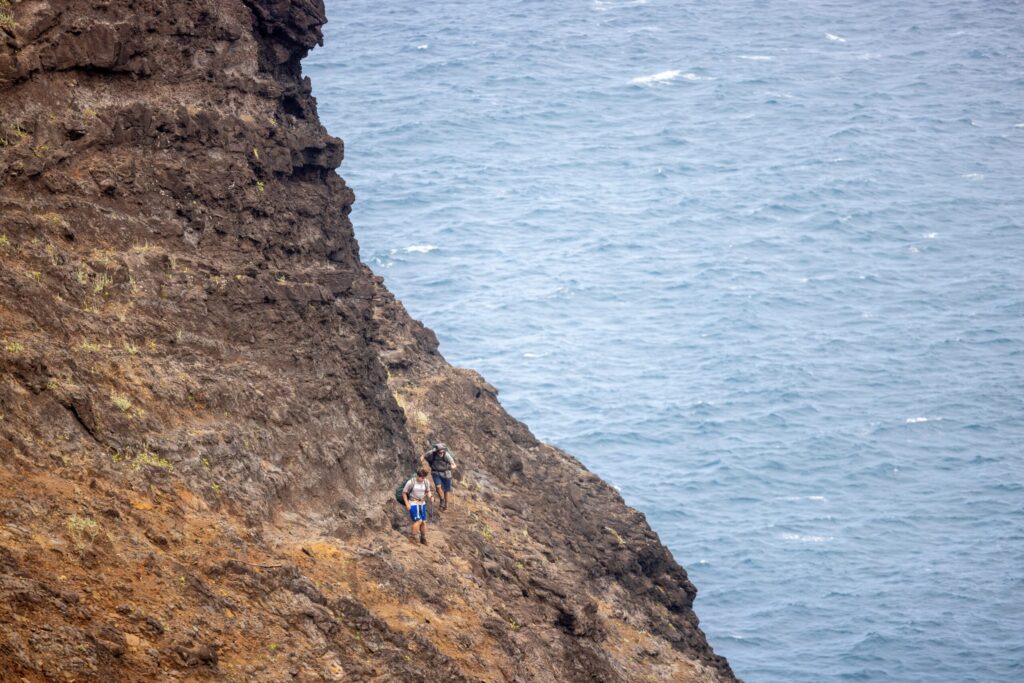
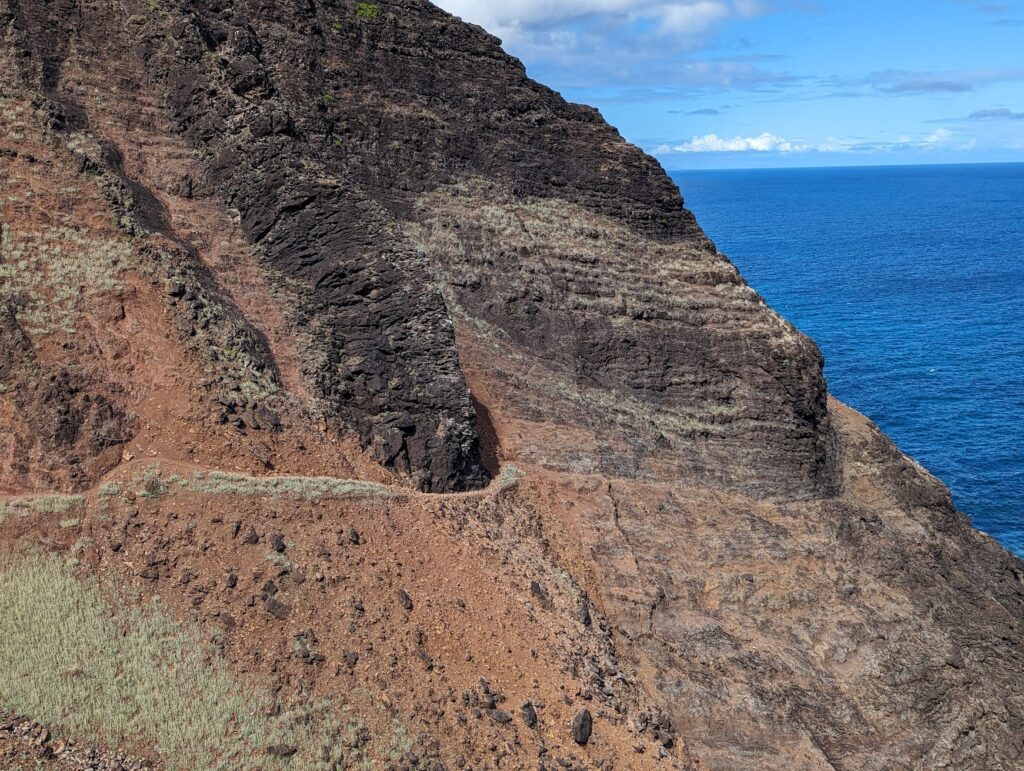
Geographically, the ledge is a narrow ribbon of trail carved directly into a sheer volcanic rock face.
- The Exposure: On your right side, the basalt cliff wall rises straight up into the sky. On your left side, the rock drops off directly into the crashing Pacific Ocean hundreds of feet below. There are no guardrails, ropes, or safety nets.
- The Path Width: In certain spots, the walkable path narrows down significantly. While two hikers can pass each other with extreme caution, it is primarily a single-file game of focus.
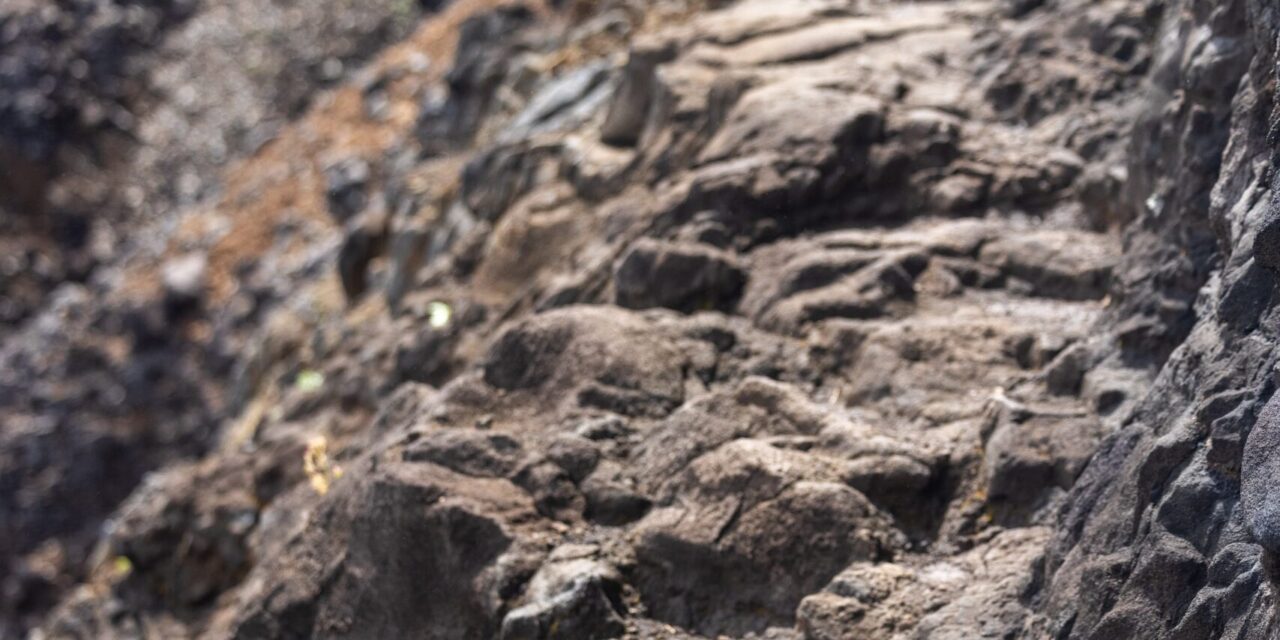
- The Mechanical Grip: The footing isn’t loose dirt; it is a solid rock shelf containing small internal ridges and handholds. Under dry, clear conditions, a standard backpacking boot with deep traction can grip the rock face easily.
The Real Danger: Weather and Erosion
When conditions are perfect, most experienced backpackers find that the fear of Crawler’s Ledge is largely psychological. However, the Na Pali Coastline is dynamic, and a shift in weather can instantly turn a standard traverse into a legitimate survival situation.
🌧️ Rain and Mud
Kauai’s North Shore is famous for sudden downpours. When the basalt rock face gets wet, it becomes exceptionally slick. Worse, the dirt approaches on either side of the rocky ledge transform into a slick red-clay mud bog, making the transition onto the rock treacherous.
💨 High Winds
The ridges of the Na Pali Coast act as natural wind tunnels. Gusts blowing off the ocean can slam directly into the cliffside. Navigating a narrow cliff path while carrying a heavy 35-to-45-pound multi-day backpack during a high-wind advisory adds a dangerous layer of instability.
🛑 Trail Erosion
The cliffs are constantly subject to rockfalls and land movement. Heavy storms can wash away portions of the path or leave loose gravel scattered across the smooth rock ledge, creating unpredictable hazards for your footing.
Essential Safety Tips for Crossing
If you have secured your official state wilderness permit and are standing at Mile 7, use these rules to navigate safely:
- Unbuckle Your Pack: Before stepping onto the ledge, unbuckle the chest and waist straps of your backpack. If you lose your footing and slip toward the edge, you want to be able to immediately shed the weight of your heavy pack rather than having it drag you down the cliff face.
- Face the Wall If Needed: If a sudden wave of vertigo or anxiety hits you, stop moving. Turn your body slightly toward the inner rock wall, lower your center of gravity, and use the natural handholds to stabilize your balance.
- Yield to Oncoming Traffic: Cultivate proper trail etiquette. The hiker moving uphill or facing the more precarious footing generally has the right of way. Find a slightly wider pocket of rock to press your back against the wall and let the other backpacker pass cleanly.
- Never Force It in a Storm: No campsite view is worth your life. If a torrential downpour is actively flooding the coast or visibility is compromised by a heavy squall, set up a temporary shelter on high ground before the ledge and wait for the system to pass.
Ready to Fully Prepare for the Kalalau Expedition?
Surviving the exposure of the ledge requires much more than just a brave mindset. Because this is an isolated, off-grid wilderness area, arriving with the wrong gear, inadequate water purification methods, or an invalid permit can cut your trip short or result in severe state fines.
For complete, hyper-detailed gear checklists, weather tracking tools, packing advice, and step-by-step permit-booking tutorials for the entire 11-mile route, visit our comprehensive primary resource hub:
👉 Access the Definitive Guide to the Entire Coast at KalalauTrail.com